Media Codes & Conventions / Symbolic codes
Symbolic codes
Mise en Scène
Mise en scène is the symbolic code of everything arranged within the frame — set design, props, costume and visual composition — and the meaning that arrangement creates.
Mise en scène (a French theatre term meaning, roughly, “everything within the frame”) is the symbolic code of how a shot is arranged. Almost nothing in a frame is there by accident, so analysing it means pausing the image and reading how its parts combine to make meaning — the close looking that lets us recognise an auteur, a filmmaker with a signature way of using these elements.
There are four parts to look for:
- Set design — the space, and how it is dressed.
- Costume, hair and make-up — what the characters wear.
- Props — the objects that do work in the story.
- Visual composition — where the figures are placed, and how the shot is framed.
Mise en scène also works hand in hand with lighting, colour and acting, which are studied as codes of their own.
Set design
Where setting is the time and place a story happens, set design is how that place is built and dressed — every wall, surface and object a chosen decision.
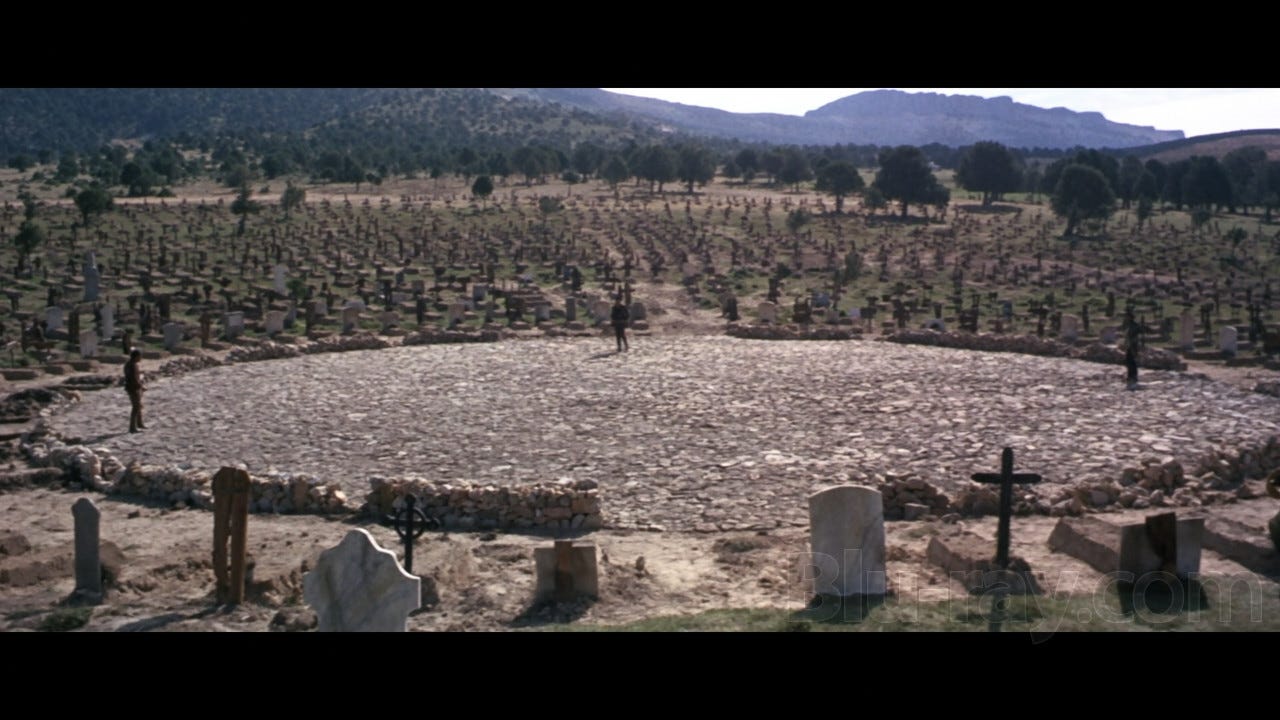
A set can be realistic — built or shot on location to look just like life — or stylistic, deliberately calling attention to itself, often in step with genre. Even a realistic set is a construction: the circular Sad Hill cemetery for the final duel in The Good, the Bad and the Ugly was dug from bare ground by the production.
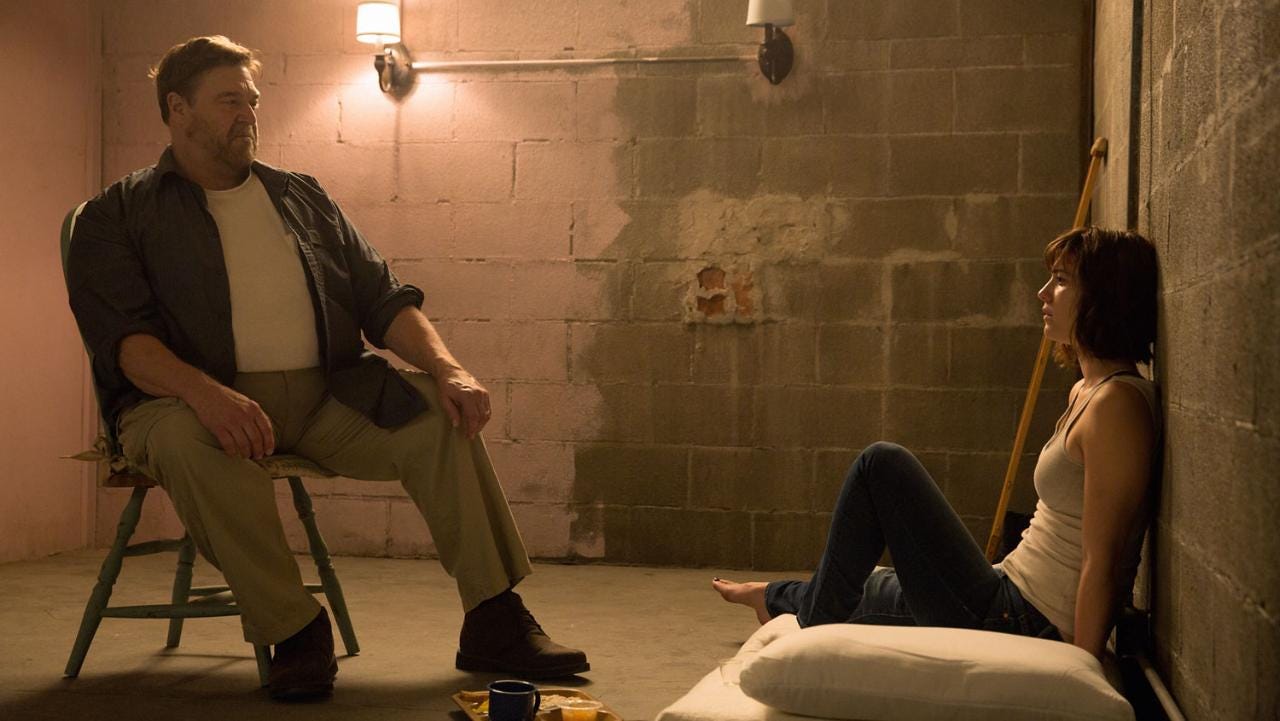
A set also characterises the people in it. In 10 Cloverfield Lane, Howard’s bomb shelter is dressed to feel like the family home he craves — even the harsh concrete softened to pink with lampshades.
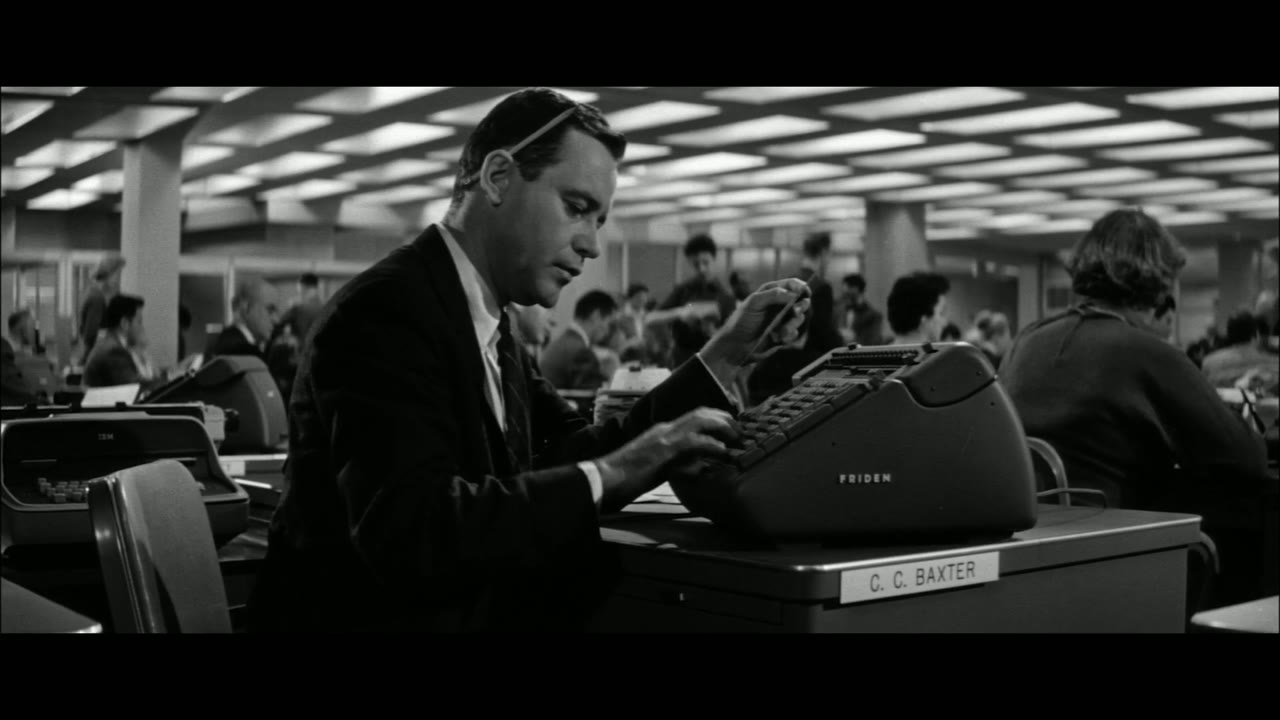
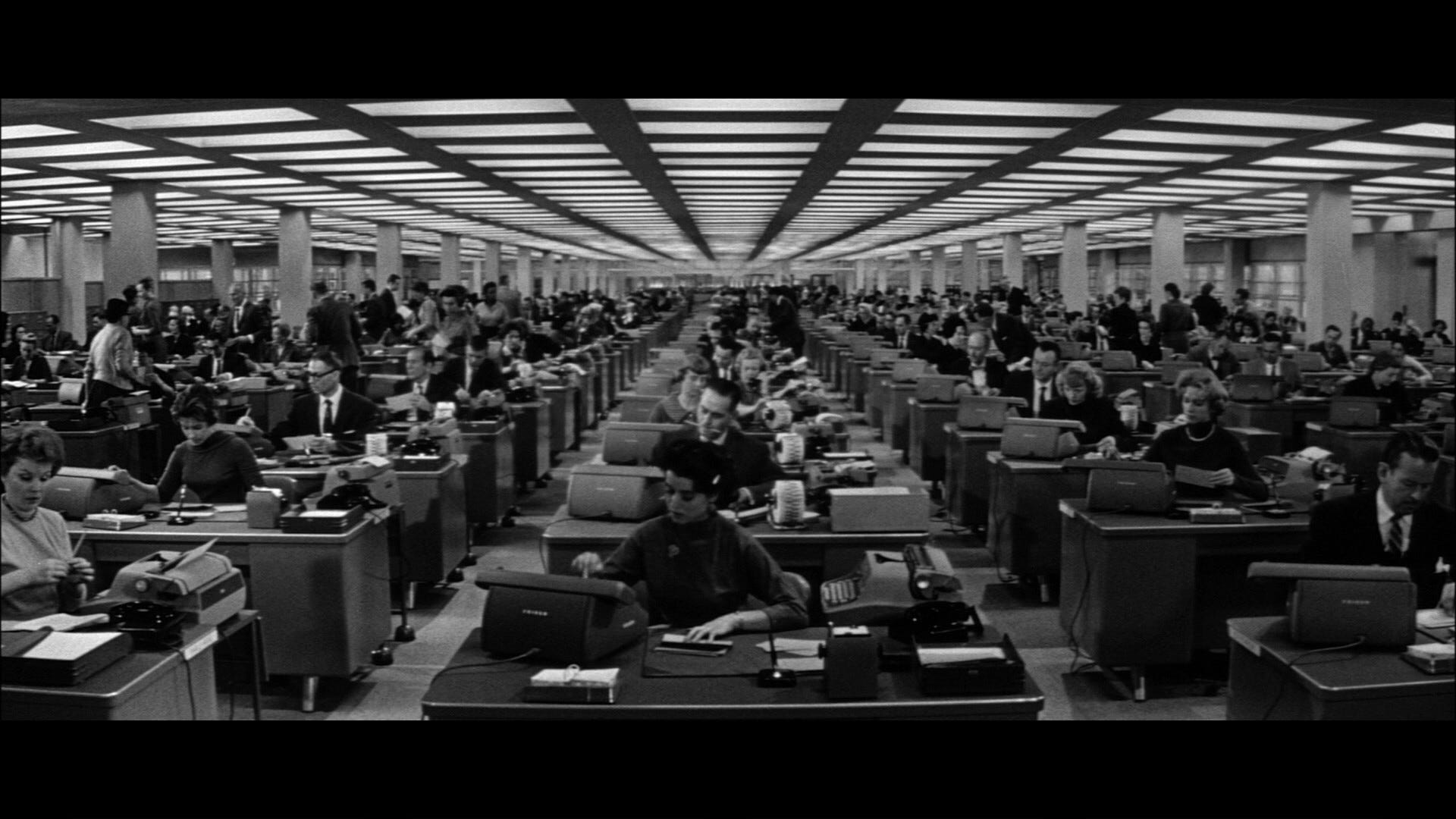
And set design can distort space for effect. The office in The Apartment uses smaller desks and shorter actors toward the back — a forced perspective that makes the room feel vast and the individual tiny.
Costume, hair and make-up
Costume — including hair and make-up — is the most direct read on a character: their status, wealth, personality, era and allegiances, and how all of those shift across a story.
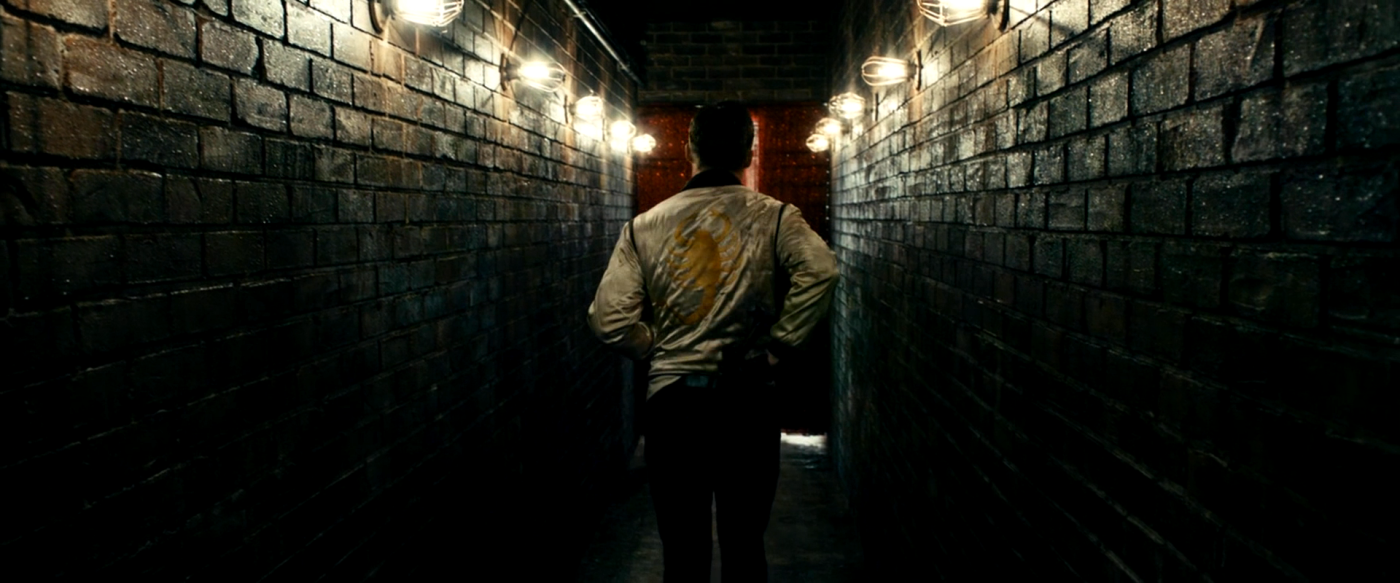
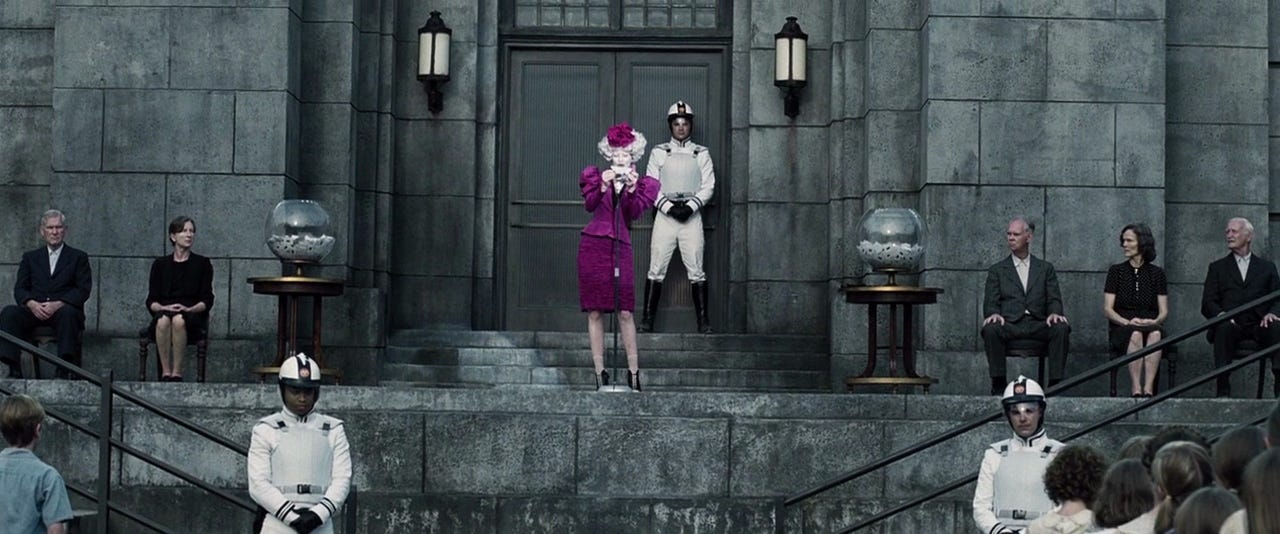
It can also draw a hard line between characters. The Driver’s white satin scorpion jacket in Drive fixes his cool, dangerous persona — and quietly tracks his arc as it gathers bloodstains — while Effie Trinket’s garish Capitol couture in The Hunger Games screams wealth and artifice against the drab clothes of District 12.
Props
A prop is any object in the frame that has a function in the action. Props are usually tied tightly to plot through cause and effect, and two special cases are worth knowing:
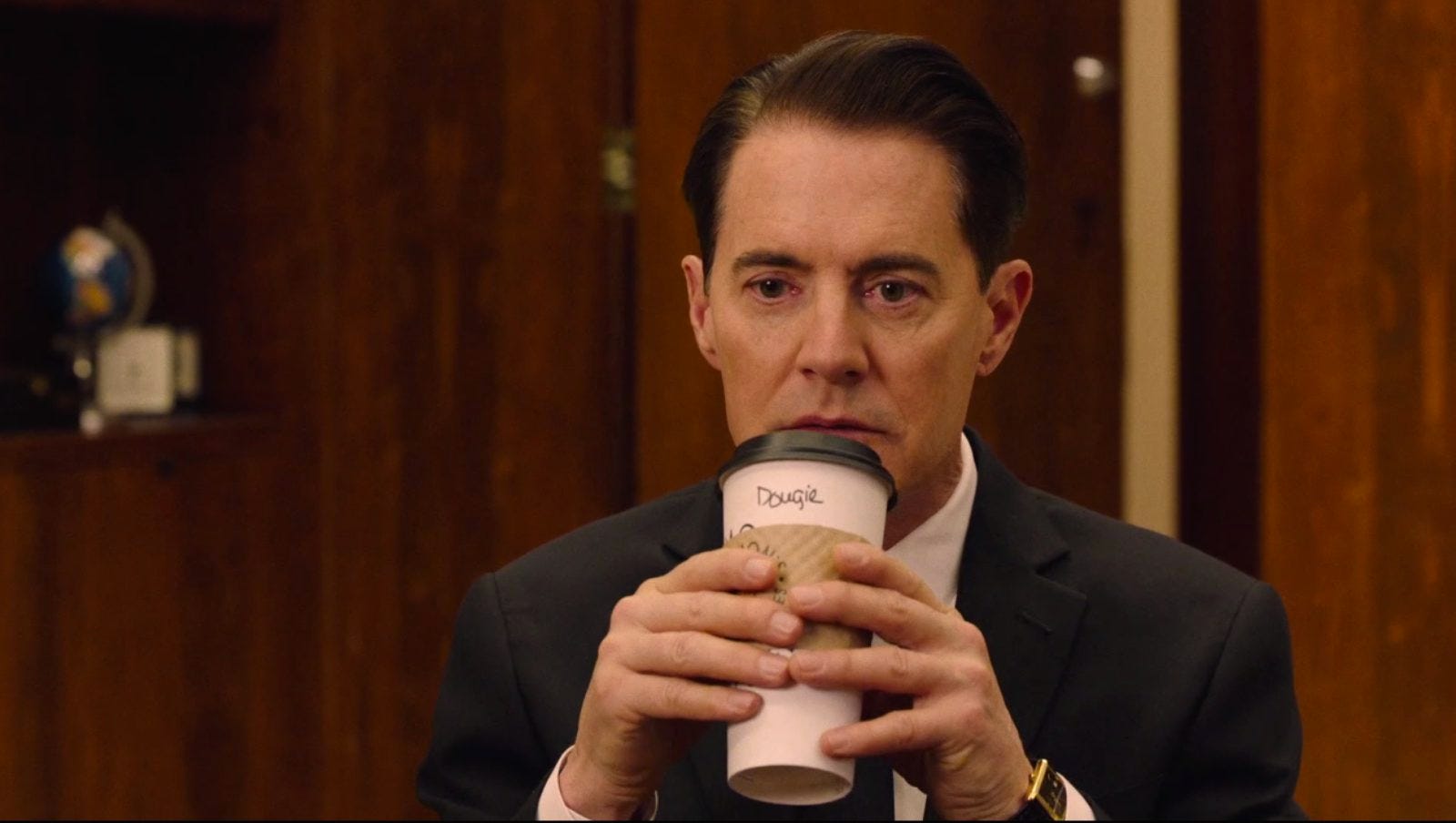
- A motif is a prop (or image) that recurs until it carries meaning — coffee runs through Twin Peaks as a marker of comfort and ritual.
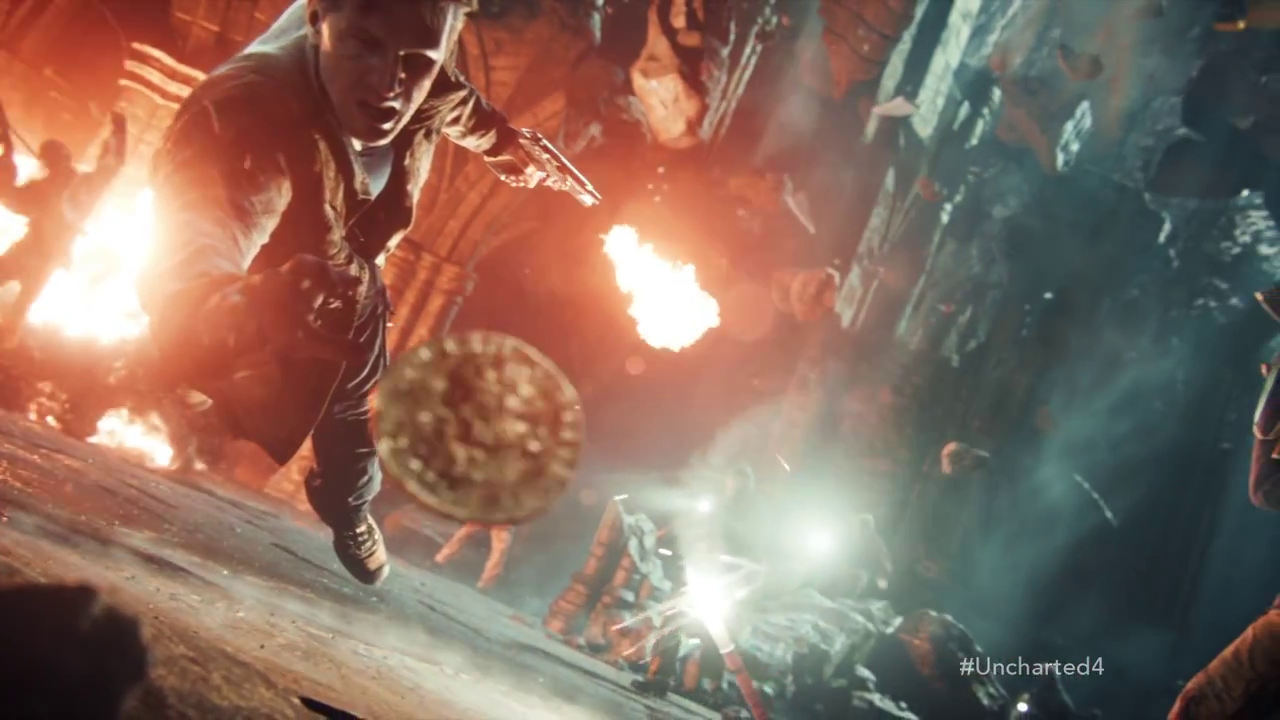
- A MacGuffin (Hitchcock’s term) is a prop that exists only to drive the plot — an object everyone wants, whose specific nature barely matters, like the treasure of Uncharted.
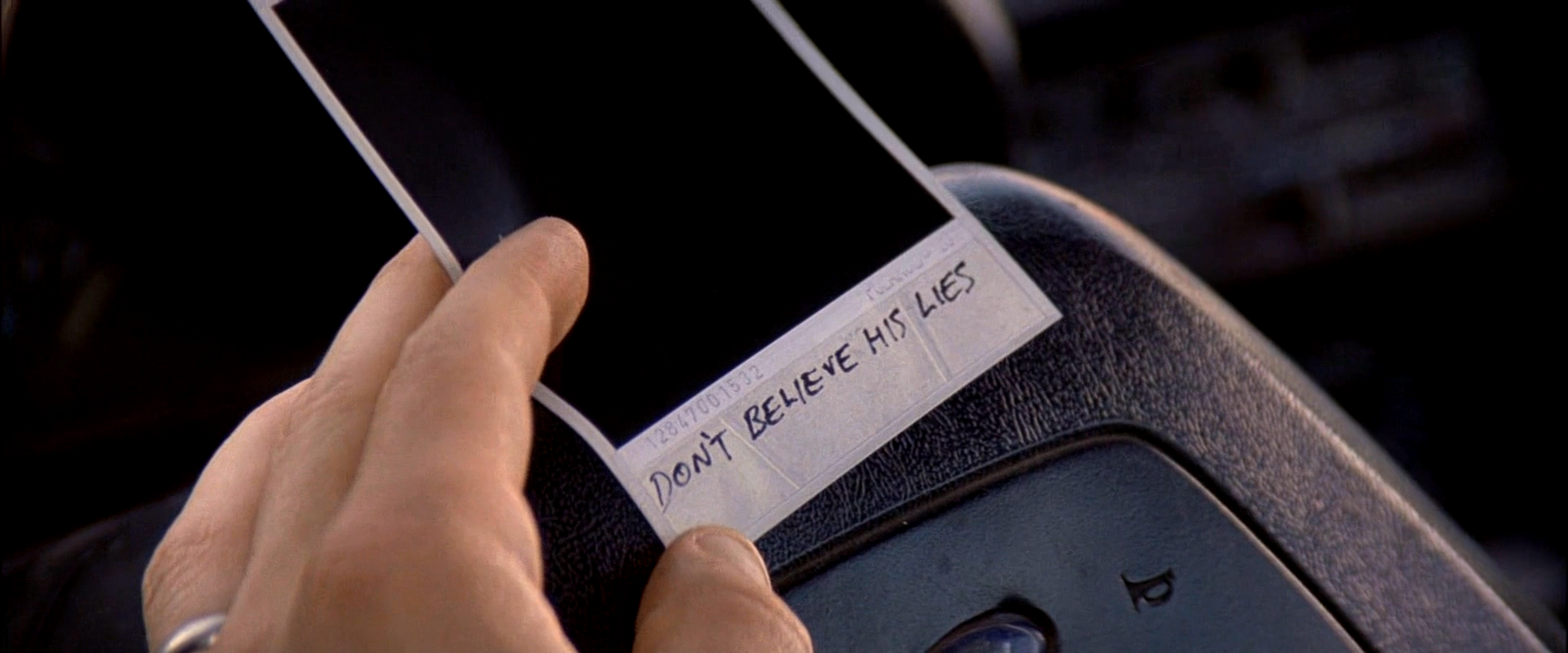
Rarer still is a prop that becomes the story itself: the Polaroids in Memento are the protagonist’s entire memory, and so the film’s logic made physical.
Visual composition
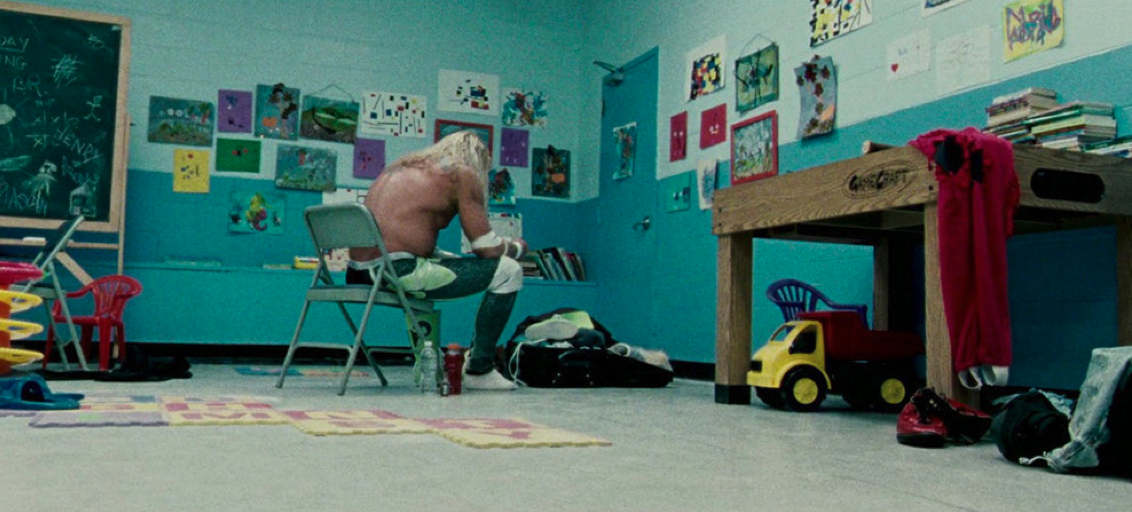
Visual composition is how everything in the frame is arranged and framed for the eye — both where the figures and objects are placed (sometimes called staging or blocking) and how the shot is composed around them. A few things to read:
- Distance — characters placed close together read as intimate; held apart, as distant or in conflict. This use of space between people is called proxemics.
- Levels — a character placed higher than another can suggest power or status; lower, submission.
- Foreground and background — a figure looming large in the foreground dominates a smaller one behind; who is pushed to the edge, or turned away from us, tells us where the power sits.
- Framing — balance and symmetry, the rule of thirds and leading lines steer our attention to what matters, often without us noticing.
How to analyse mise en scène
Freeze the frame and work through the parts: name what is in the set, the costumes and the key props, note where the figures are placed and how it is all composed — then ask the only question that matters: why has the filmmaker put it there, and what does it make us feel or think?